Public technical summaryAvailable
Current website record with its source, version and qualifications. This is not an approved order specification.
Download specification summaryAllow optional website analytics, including Google Tag Manager and video play events? You can send an enquiry with either choice and change your preference in the footer. Privacy notice

Configuration reference
100 W-class configuration. Supplied point tests include output below 100 W. Agree frequency-point output and operating conditions before evaluation. Conditions & evidence →
WhatsApp · JohnHardware examples
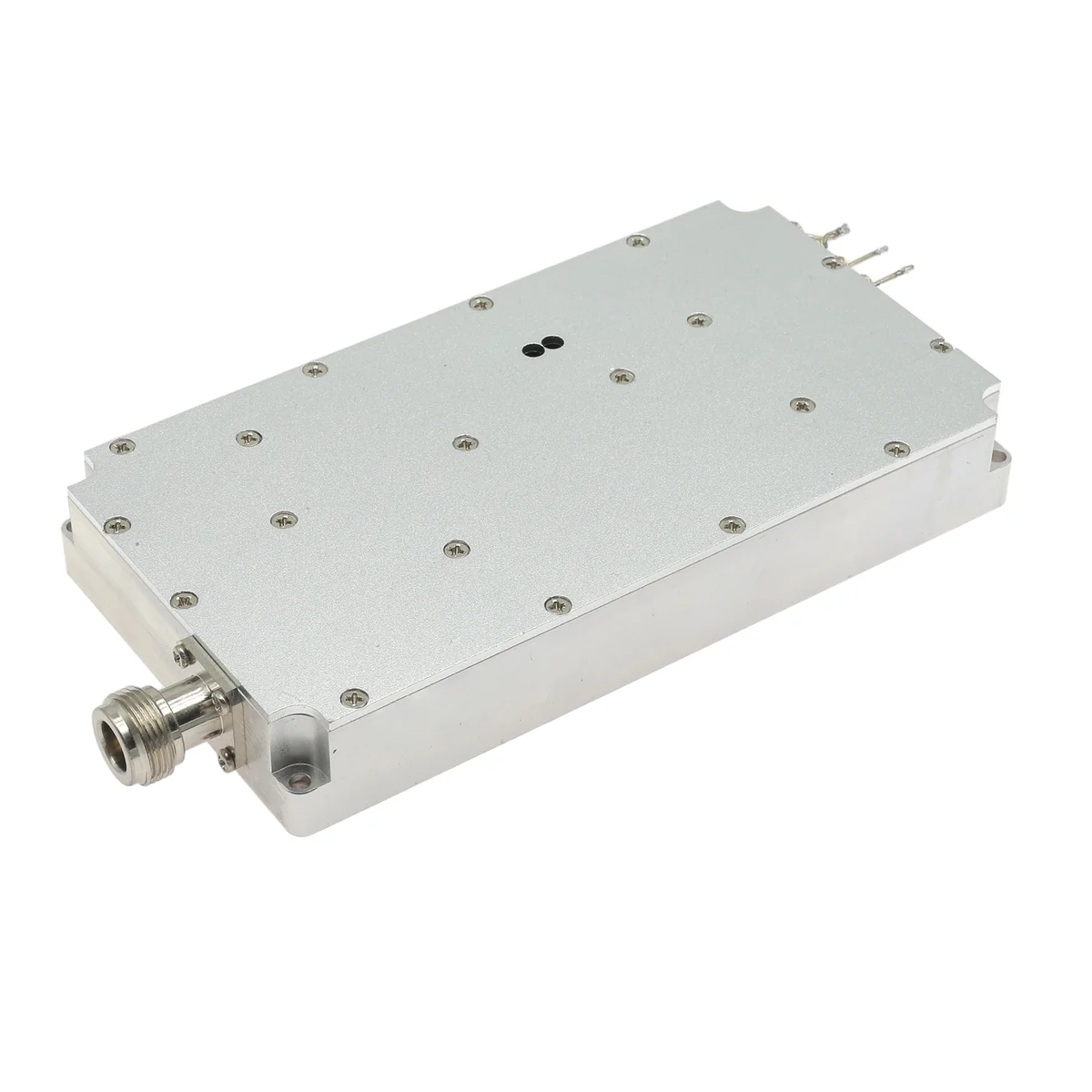
Values below retain the source wording and qualifiers. Max gain is not a linear-gain guarantee; port VSWR is not a permitted load-mismatch rating. Enable voltage does not establish a control protocol. Working temperature does not define a thermal design. Missing fields require confirmation for this configuration.
Source declares amplifier shutdown at 80°C. Measurement point and reset logic require confirmation.
−20 to +85°C; source note: working properly
±1 dB, −20 to +55°C
Request a matched drawing, mounting and cooling requirements for the agreed build and operating conditions.
100 W-class configuration. Supplied point tests include output below 100 W. Agree frequency-point output and operating conditions before evaluation.
The 28 V supplied point tests list 6.2–14.8 A, above the declared 10 A at some points; confirm supply sizing for the agreed operating conditions.
47.7–52.4 dBm · 19 frequency points
Supplied 28 V point-test table, 100–1000 MHz in 50 MHz steps. Input drive varies by point. Duration, temperature, load and calibration conditions were not supplied.
49.4–53.1 dBm · 19 frequency points
Supplied 32 V point-test table, 100–1000 MHz in 50 MHz steps. Additional point-test evidence; it does not establish a guaranteed 28–32 V operating range or a 100 W minimum across the band.
Configuration reference prepared 9 November 2026. Final specifications are confirmed in the project quotation.
Website data version: web-ba675cf2ebd2INTEGRATION REVIEW
Band and power are only the first check. Agree how RF enters the assembly, how it is installed and how your controller connects.
These are document requests, not confirmed features. RS485 does not establish Modbus compatibility; alarm telemetry does not establish automatic shutdown.
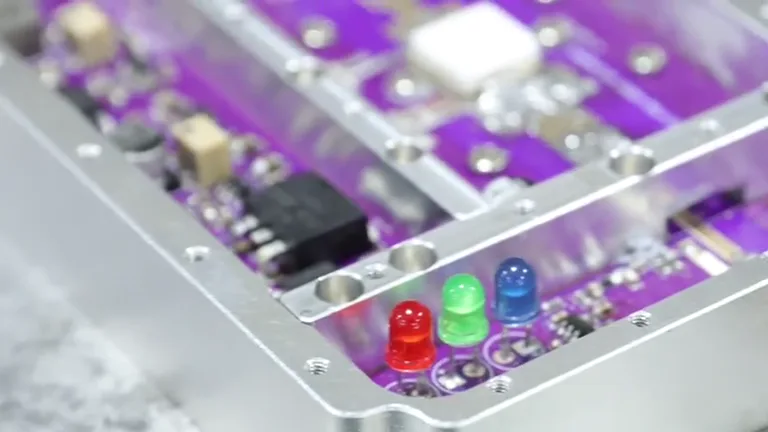 Before you integrateThe mounting surface and coolingWatch film · 0:11
Check what this website record supports before planning a sample. Red items need matched evidence or confirmation; they are not approved specifications.
Current website record with its source, version and qualifications. This is not an approved order specification.
Download specification summaryNot supplied in this website record.
Point-test summaries are shown on this page. Complete test conditions and agreed acceptance limits remain unconfirmed.
Envelope dimensions are listed; matched mounting drawings and thermal requirements remain unconfirmed.
A complete matched pinout, input limits, protection actions and reset sequence remain unconfirmed.
Model- and quantity-specific sample terms, MOQ, lead-time basis and warranty require confirmation.
Adds these open items to the editable enquiry on this page. Nothing is submitted automatically.
ENGINEERING / PROCUREMENT
FAQ revision: 2026-11-17.1
Website data revision — not a hardware revision: web-ba675cf2ebd2
November 2026 specification and supplied point-test records / 2026-11-05
The recorded interval is 100–1,000 MHz. Candidate screening checks whether this single reference contains both ends of your requested interval. This is a frequency check, not proof of minimum output, linearity or engineering suitability throughout that interval.
Evidence and next stepNo. The source specification uses a maximum-output definition, and the published point-test summary includes results below the class label. Point tests do not establish a full-band minimum or a continuous-duty guarantee. Review the conditions and unresolved differences before agreeing acceptance limits.
Evidence and next stepUse website data revision web-ba675cf2ebd2 when referring to this page. It identifies the public record, not the manufacturer's hardware or firmware revision. Confirm the formal part number and matched specification, drawing and test versions before accepting another file as a replacement.
Evidence and next stepUse only the fields and conditions shown for this reference. Missing drive, connector, cooling, protocol or protection details remain open for review. Do not transfer a pinout, RS485 command set, input architecture or alarm/shutdown behaviour from another configuration.
Evidence and next stepUse the documentation requests and editable enquiry on this page. Include the configuration revision, quantity, required documents, acceptance conditions and next step. The server validates the current public version when saving the enquiry; only a successful save returns an enquiry reference.
Evidence and next stepLET’S DEFINE YOUR CONFIGURATION
A few details are enough to start. Add a specification if you have one.
john@jwrfpa.comWhatsApp · +86 153 2387 6241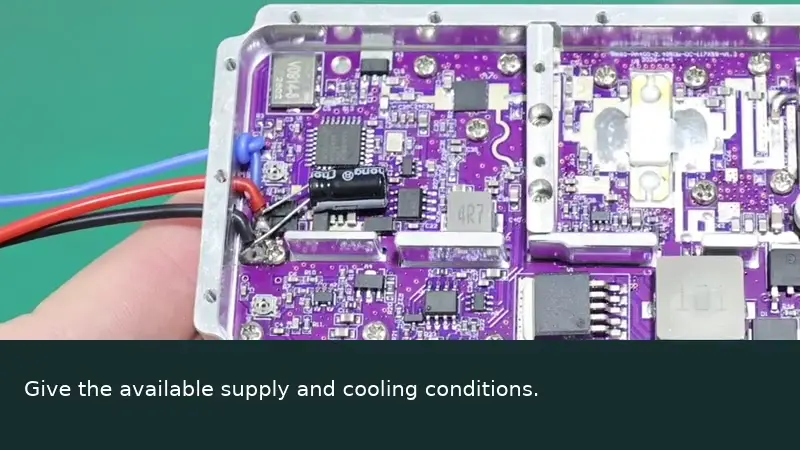 Before you sendWhat to include in an RF module enquiryWatch film · 0:10